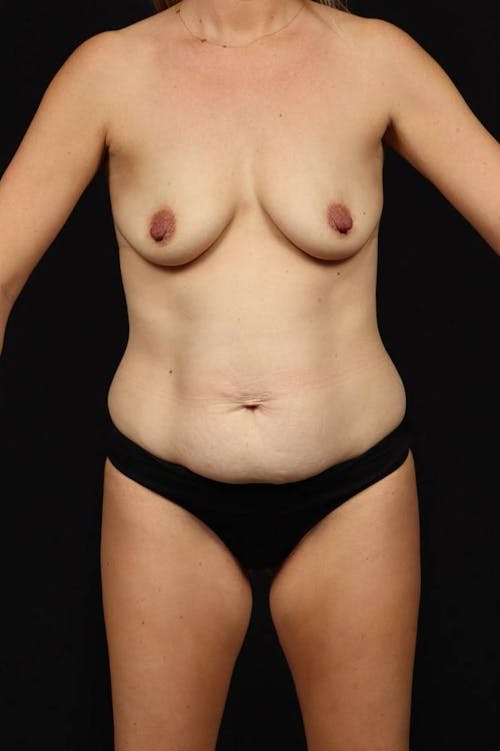
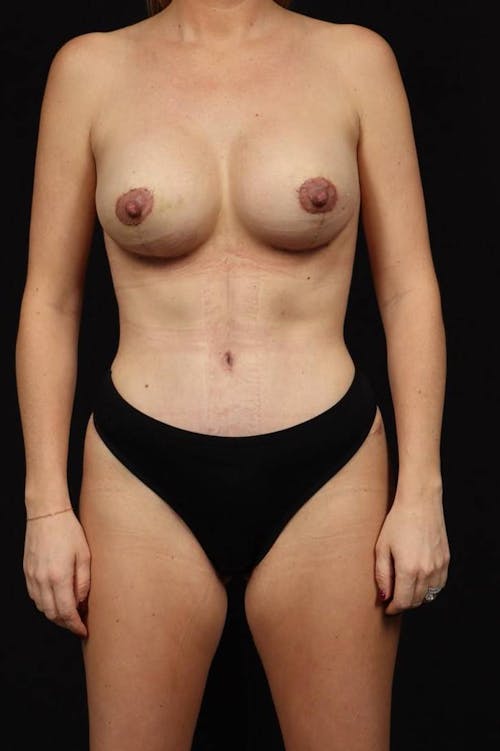
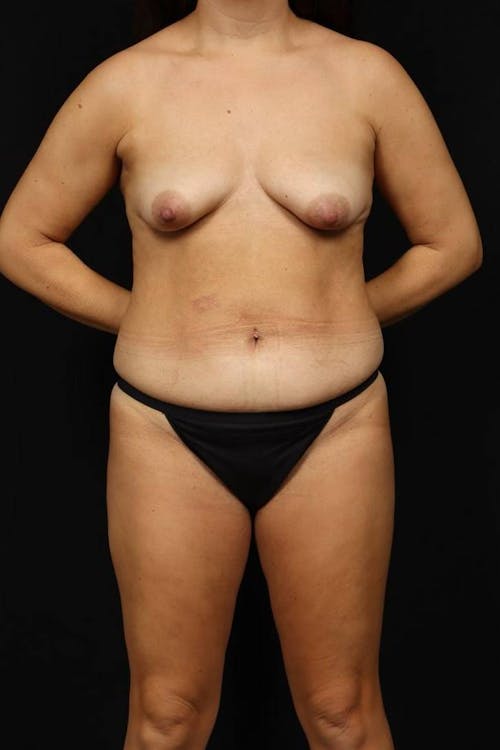
Dr. Unger places the incision for a tummy tuck strategically low in a bikini-friendly location. The belly button is positioned carefully, and an “innie” belly button is created. Silicone therapy and scar gels are used following surgery to assist with the healing process.
The surgery takes two to four hours. Surgery is performed under general anesthesia at a fully accredited surgical facility. The incisions are closed in multiple layers with absorbable sutures that dissolve over time. Surgical tape is placed over the outermost incision, and you will be placed in a garment.
Generally, recovery for a tummy tuck is two weeks. You will be advised to stay away from work for that period. If your work involves heavy lifting with no light-duty option, you may be required to be off of work longer. You are restricted from heavy lifting (greater than 5 lbs) for six weeks. You will initially be slightly bent at the waist after your tummy tuck surgery. Gradually, each day, you will straighten up until you are completely straight. This process takes about one to two weeks.
You will remain in your first-stage garment for three weeks. You will be placed in a second-stage compression garment after this point. You will be advised to remain in a compression garment for a total of three months.
Tummy tuck recovery is generally one of the most difficult recoveries for patients. This is mostly due to muscle repair. We use Exparel, which is a long-acting pain medicine injected at the time of surgery. This lasts about three to five days. This greatly helps patients recover. It is important that you have a good support system and someone who will be able to help you with simple things such as meals, getting in and out of bed, and other activities common to daily living.
We will continue to follow you and monitor your long-term recovery. After the initial post-operative period, during which you will be seen fairly regularly, your follow-up appointments will be yearly. For us, the relationship does not end after surgery; we value your long-term results and well-being. How our patients look and feel months and years after surgery is as important—if not more important—than how they look and feel weeks after surgery.